Commercial buildings with chillers, commercial kitchens, elevators, and vehicle chargers can require high voltage utility service. Utility design determines how that power reaches your equipment safely, reliably, and within the project budget. When you plan it late, transformer delays and utility redesigns can push back your opening date.
At TYEC, our mechanical, electrical, and plumbing (MEP) engineers coordinate electrical service with every connected discipline. We work directly with utilities, architects, and contractors to keep service designs practical and on schedule. Here is how you can manage high voltage service for demanding commercial equipment.
How Do You Manage High Voltage Utility Design for Commercial Equipment?
You manage utility design by calculating accurate loads, engaging the utility early, and coordinating equipment locations with architecture. Short-circuit, arc flash, and coordination studies then confirm that high voltage gear protects equipment and workers. Early procurement planning for transformers and switchgear keeps long lead times from delaying your project.
Why Utility Design Starts With Accurate Equipment Loads

Every service decision, from transformer size to switchgear rating, flows from the building's calculated electrical load. However, commercial equipment schedules change during design as tenants, kitchens, and mechanical selections evolve. As a result, utility design must track those changes so the service matches what the building needs.
Large motors on chillers, pumps, and elevators draw high inrush current when they start. Consequently, you may need soft starters or variable frequency drives to limit voltage dips. TYEC’s electrical engineering team evaluates starting methods alongside our mechanical engineering team during equipment selection.
Demand factors also matter, because connected loads rarely operate at full output at the same time. For example, applying code demand factors to kitchen equipment prevents oversized transformers and costly service upgrades. Meanwhile, you still plan reasonable spare capacity for future tenants or electric vehicle chargers.
Accurate loads protect your budget and give the utility reliable data for its own design. TYEC documents every load assumption so reviewers and utility engineers can verify the numbers quickly.
Coordinating With the Utility Provider Early
Utilities control the primary service, metering, and transformer standards, so their requirements shape your entire electrical design. In Florida, providers such as Florida Power & Light (FPL) publish detailed service standards for commercial projects. Early coordination keeps utility design aligned with those standards and avoids late redesign of service equipment.
-
Submit a load letter early: Provide connected and demand loads so the utility can size service.
-
Confirm service voltage: Decide between utility-owned transformers and customer-owned primary service based on load and cost.
-
Verify easements and access: Coordinate transformer pads, vaults, and truck access with FPL.
-
Request available fault current: Obtain utility fault data to size equipment ratings and support arc flash studies.
Utility reviews can take weeks, especially when load changes require revised applications or new easement agreements. Therefore, we submit information early and track responses so utility milestones match your schedule. Responsive follow-up prevents the silent delays that stall permits and push back energization dates.
Similarly, early meetings with utility planners reveal feeder capacity limits before you finalize the site plan. Our article on early-stage engineering collaboration shows how upfront planning reduces costly change orders.
Integrating Utility Design Into the Site and Architecture
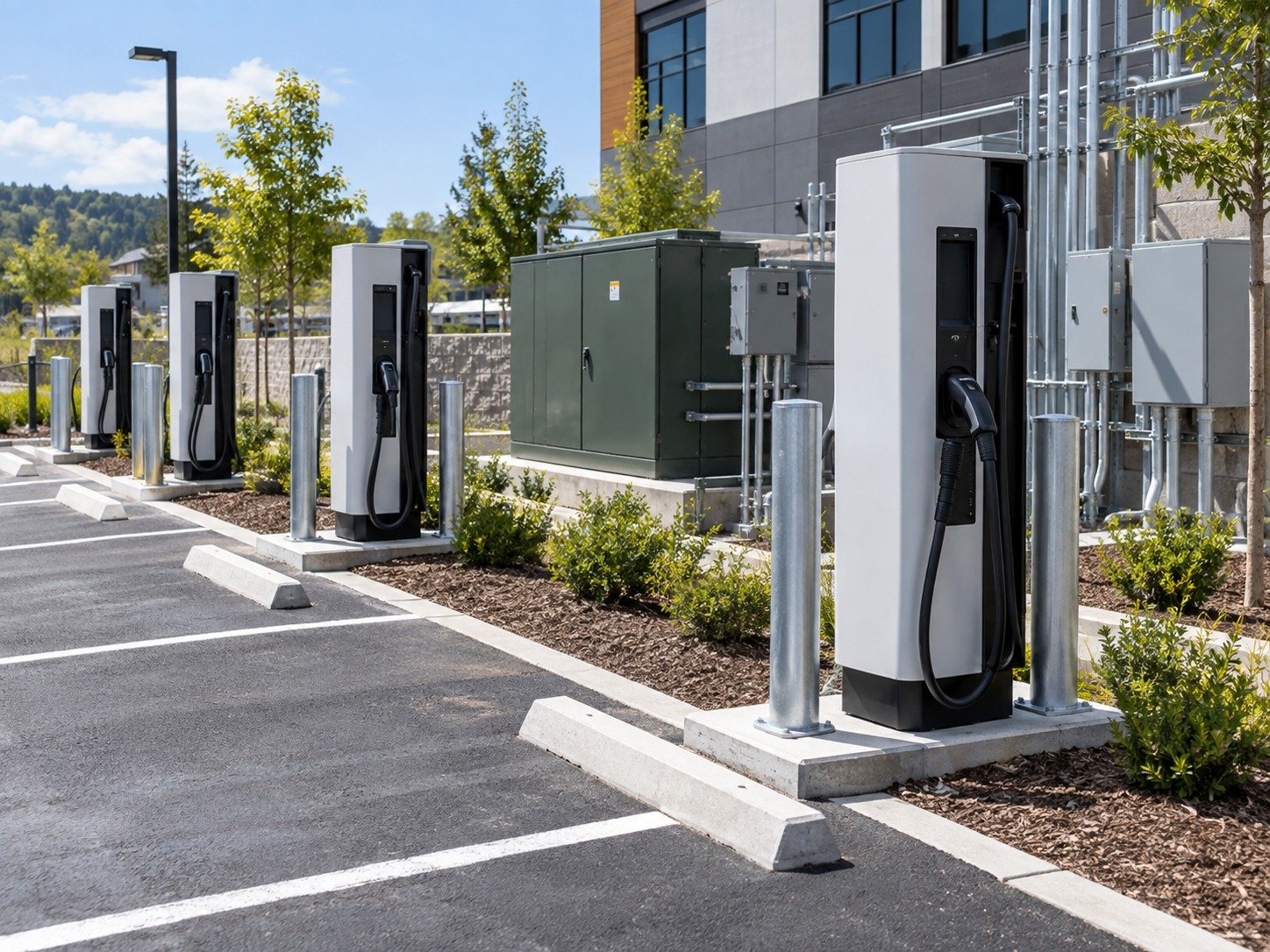
Transformers, switchgear, and meter banks occupy space that architects would rather give to landscaping. In addition, utility design must satisfy clearance, access, and flood elevation requirements that affect the site layout. TYEC coordinates those requirements with your architect during schematic design, when locations remain flexible.
Locating Transformers and Switchgear Discreetly
Pad-mounted transformers need truck access and clearances, yet they should not dominate a building's primary facade. For instance, screening walls or landscaped enclosures can hide equipment while preserving required working space. TYEC article on hiding complex mechanicals explains how discreet placement protects clean architectural lines.
Utility Design for Safety and Maintenance Access
High voltage equipment demands protection studies that define equipment ratings, breaker settings, and arc flash labels. According to the Electrical Safety Foundation International, 1,940 U.S. workplace fatalities involved electricity between 2011 and 2023. Specifically, we design working clearances, maintenance switching, and arc energy reduction to protect service technicians.
In turn, facility staff can service equipment safely without shutting down the entire building. Clear one-line diagrams and labeling also help future contractors understand the system before any work begins.
Planning Around Equipment Lead Times and Costs
Electrical equipment lead times now shape project schedules as much as permits and construction sequencing do. According to Wood Mackenzie, U.S. distribution transformers faced an estimated 10% supply deficit in 2025. For that reason, you need procurement strategies for transformers and switchgear before construction documents reach completion.
Early release packages let owners order long-lead gear while design continues on other building systems. Alternatively, utility-owned transformers can shift procurement risk to the provider when service standards allow it.
Standardizing equipment also reduces cost and lead time, since common ratings ship faster than custom configurations. For example, standard switchgear lineups shorten delivery and simplify spare parts versus custom sections. When you make utility design choices with procurement in mind, your electrical budget stays predictable.
Principal oversight keeps these decisions grounded in practical experience rather than theoretical worst cases. At TYEC, our principals review service strategies, utility correspondence, and procurement timelines on every commercial project. Ultimately, coordinated planning helps you energize the building on schedule and open doors to customers sooner.
Simplify Your Utility Design With TYEC
Strong utility design connects accurate loads, early utility coordination, and site planning into one clear strategy. When you address lead times and safety studies early, your project avoids costly delays and redesigns. TYEC brings MEP expertise under one roof, so electrical service decisions support every connected system.
Our commercial and hospitality portfolio includes offices, restaurants, dealerships, and resorts across South Florida. We respond quickly, coordinate directly with utilities, and deliver practical designs that fit your timeline. Contact our engineers to plan dependable high voltage service for your next commercial project.