Lighting sets the mood in a hotel lobby, dining room, or custom residence before anyone speaks. Electrical control systems let you shift that mood through the day with scenes, dimming, and color changes. When you design them well, guests notice the atmosphere rather than the switches and keypads behind it.
At TYEC, our engineers coordinate lighting controls with mechanical, electrical, and plumbing (MEP) systems in-house. We work alongside architects and lighting designers so every scene supports the architectural concept. Here is how you can plan atmospheric lighting that stays intuitive, efficient, and easy to maintain.
How Do Electrical Control Systems Create Atmospheric Lighting in High-End Spaces?
Electrical control systems create atmospheric lighting by grouping fixtures into zones and recalling preset scenes from a single keypad. Dimming, tunable color temperature, and timed transitions let you adjust brightness and warmth for each activity. The result is a space that feels intentional while using less energy than static, full-output lighting.
Why Electrical Control Systems Shape Luxury Experiences
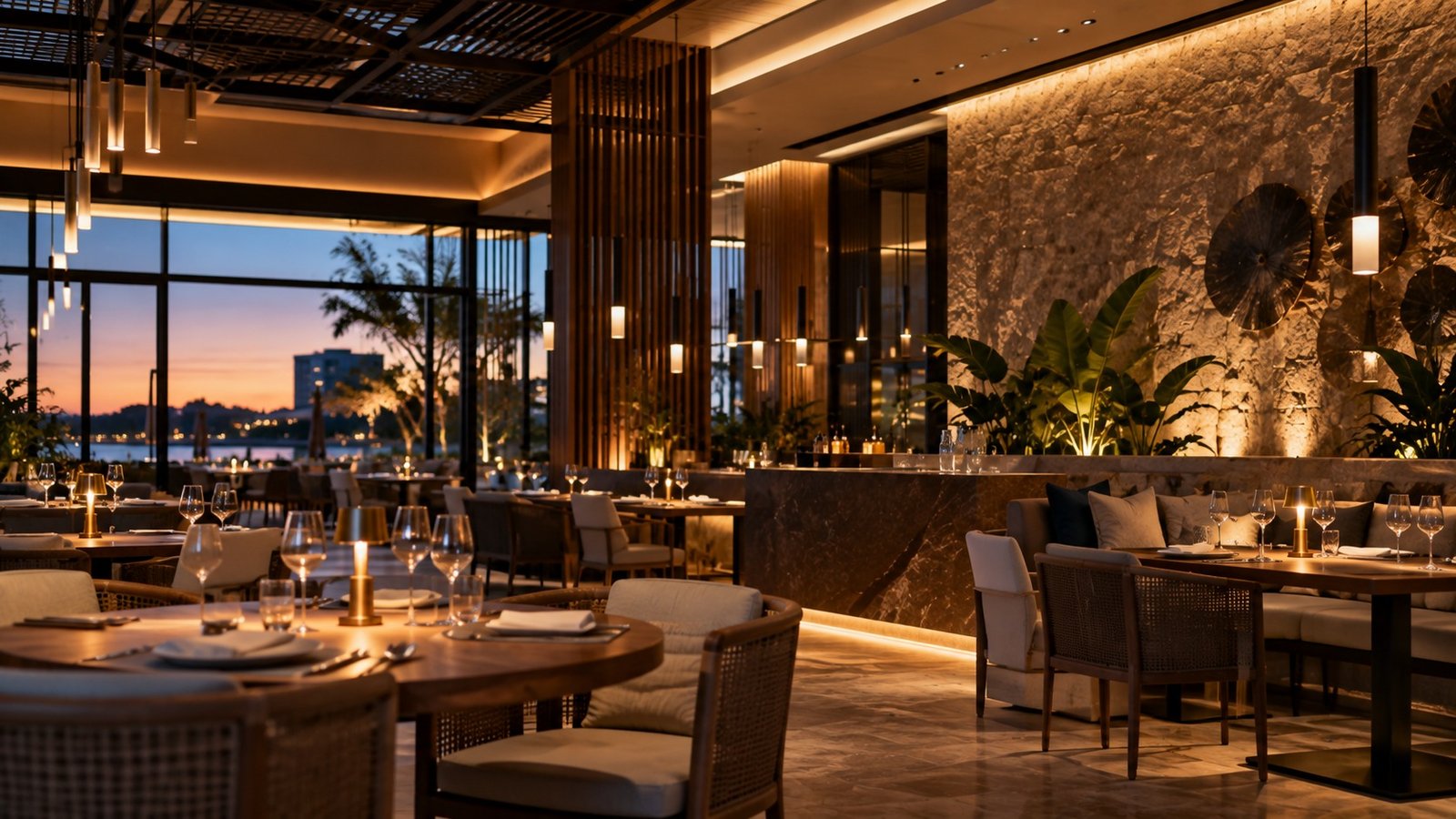
High-end guests judge a space by how it feels, and lighting drives that impression. For example, a restaurant needs bright service light at lunch and warm, candlelit tones by evening. Without controls, staff adjust dozens of switches and produce uneven results each night.
Well-designed electrical control systems replace that guesswork with repeatable scenes that match the brand experience. In addition, astronomical time clocks shift exterior and lobby scenes as daylight changes. As a result, your space looks the same at dusk in June as it does in December.
Energy performance matters too, because high-end spaces run light-emitting diode (LED) fixtures across long operating hours. According to the DesignLights Consortium, networked controls can save about 50% more lighting energy than a standard LED retrofit. Consequently, you gain atmosphere and efficiency from the same investment instead of trading one for the other.
TYEC plans lighting controls as part of the guest experience rather than a late line item. Our article on MEP design in luxury hotels explains how engineering shapes comfort and lighting.
Core Components of an Atmospheric Lighting System
Atmospheric lighting depends on a few core components working together through one coordinated control platform. TYEC’s electrical engineering team selects each component based on the space, budget, and required flexibility. Most electrical control systems for high-end projects include the following elements in some combination.
-
Dimming drivers: Digital addressable lighting interface (DALI) drivers deliver smooth, flicker-free dimming to low levels.
-
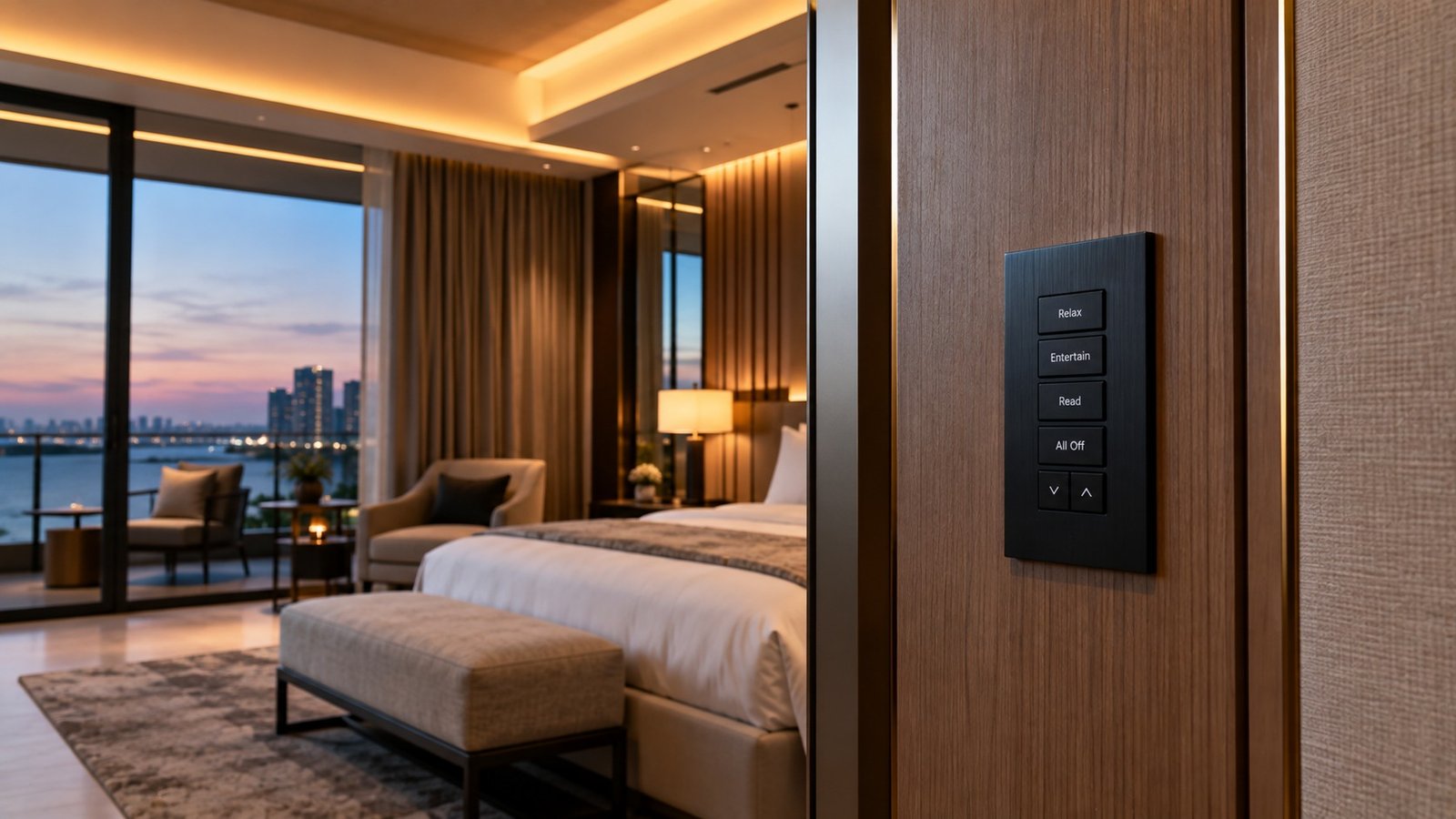
Scene keypads: Engraved keypads recall preset scenes like dining, presentation, or cleaning with one press.
-
Tunable white fixtures: Adjustable color temperature shifts spaces from cool daytime light to warm evening tones.
-
Sensors and time clocks: Occupancy and daylight sensors adjust output while time clocks schedule transitions.
Driver and fixture compatibility requires careful attention, because mismatched components cause flicker, buzzing, or abrupt dimming. Therefore, we verify dimming curves and DALI addressing before specifications reach the bidding stage. Early verification prevents costly fixture swaps after ceilings close and finishes go in.
Similarly, we size panels and relay cabinets for realistic loads instead of unused capacity. Right-sized control hardware keeps costs practical while leaving reasonable room for future scene changes.
Designing Electrical Control Systems Around Architecture
Luxury architecture depends on clean walls, concealed sources, and uninterrupted ceiling planes that lighting must respect. However, electrical control systems need keypads, dimming panels, and sensors that can clutter a refined interior. TYEC coordinates device locations with your architect early, so controls blend into millwork and finish schedules.
Layering Light for Mood and Function
Layered lighting combines ambient, accent, task, and decorative sources that you control as separate zones. For instance, a hotel suite might separate cove lighting, art spots, and bedside reading lights. Each scene then blends those layers into a single, balanced composition that supports the room's purpose.
Keeping Electrical Control Systems Simple for Users
Sophisticated scenes lose value when guests or staff cannot figure out how to use them. According to Hotels.com, half of surveyed hotels now offer a verbal technology walkthrough at check-in for features like smart lighting. For that reason, we limit keypads to a few labeled scenes and hide advanced settings.
Meanwhile, facility managers keep access to scheduling and programming through a secure tablet or web interface. Our article on hiding complex mechanicals shows how concealed design keeps technology out of sight.
Coordinating Lighting With Mechanical and Energy Goals
Lighting controls interact with other building systems, especially heating, ventilation, and air conditioning (HVAC) equipment. Shared occupancy sensors can signal the HVAC system to set back temperatures when rooms sit empty. In turn, you reduce cooling energy without adding separate sensors or duplicate wiring runs.
Code compliance also shapes the design, since the Florida Building Code energy provisions set lighting control requirements. Well-planned electrical control systems meet those mandates while preserving the flexibility that high-end spaces demand.
Building management system integration centralizes alarms, schedules, and energy data in one place. Specifically, a hotel engineer can adjust ballroom scenes and cooling setpoints from the same dashboard. Our mechanical engineering team coordinates those interfaces so lighting and comfort systems share accurate data.
Integration only makes sense when the benefits justify the added programming and commissioning costs. Instead, smaller venues may perform better with standalone controls that staff can learn in minutes. Ultimately, TYEC recommends the simplest solution that achieves your atmosphere, efficiency, and code goals.
Plan Your Electrical Control Systems With TYEC
Electrical control systems turn ordinary fixtures into atmosphere that guests remember and owners can manage easily. When you plan scenes and integration early, you protect the design, budget, and schedule. TYEC delivers coordinated MEP engineering with principal-level oversight on every hospitality and residential project.
Our hospitality and residential portfolio includes resorts, restaurants, and custom homes across South Florida. We respond quickly, meet deadlines, and keep every lighting scene aligned with your architectural vision. Contact TYEC to start designing intuitive lighting controls for your next high-end hospitality or residential space.